
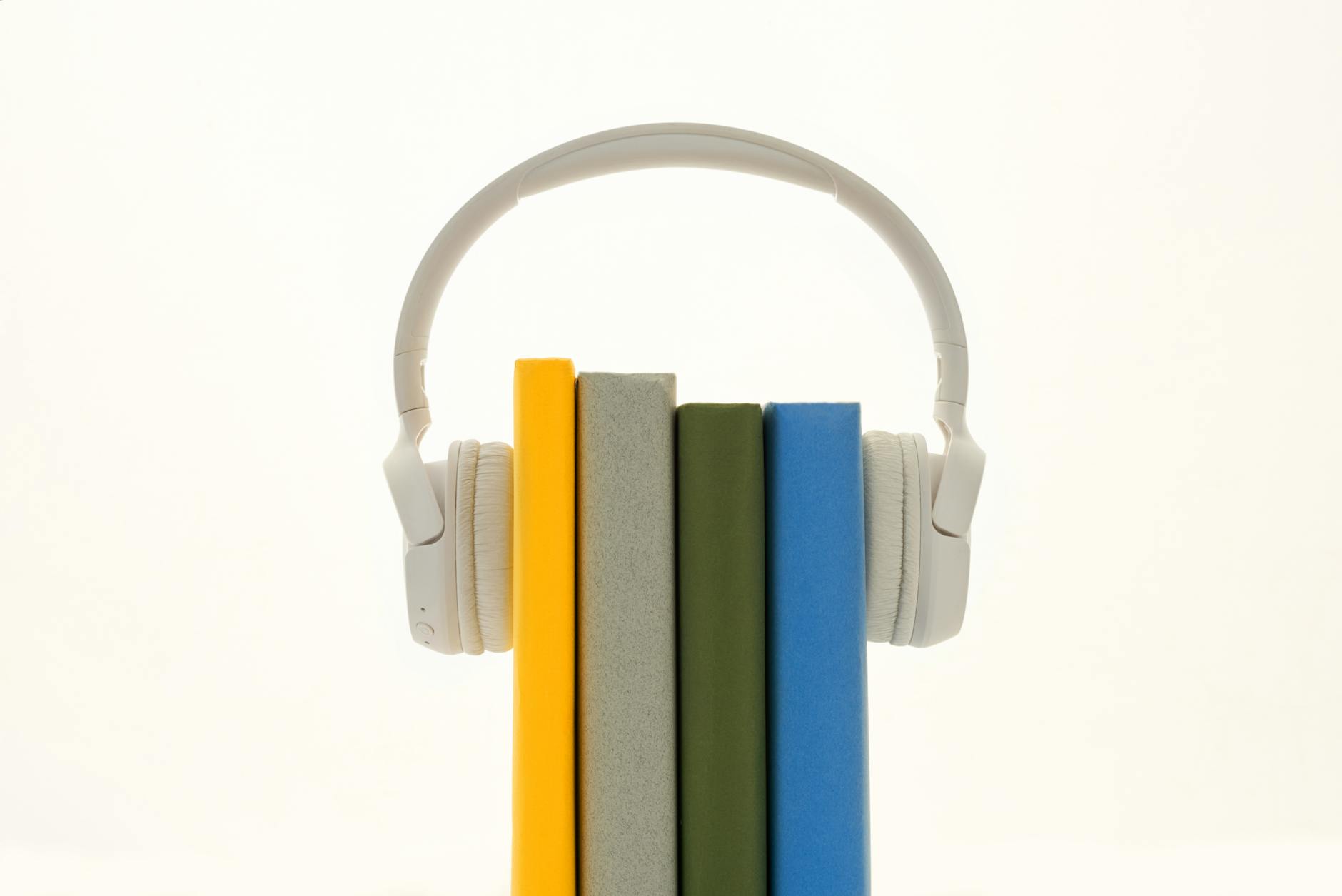
To this day, I’m still baffled when someone mutters that “listening to an audiobook” is not reading. Do a little search on Google or your favourite social platform and the debate will come up.
I started listening to audiobooks a few years ago, maybe it was during the pandemic, I can’t really remember, as a way to get access to books I didn’t physically possess and to give myself a chance to immerse in a story while running, walking the dog (Luna), which later became the dogs (Luna + Coco + Oliver + Valentina), or simply walking to work.
I used to listen at regular speed until my wife, Edna, introduced me to the amazing concept of increased speed. I don’t have anything against narrators, and some of them do an amazing job at regular speed, but some seem to have been tasked with the job of reading slowly, I guess, to catch the listener’s attention. When I come across one of those, I bump them up to a solid 1.35 or even 1.5 x speed.
I digress.
Those on the “audiobooks are not books” trenches, tend to argue that they are easy reads, passive rather than active, that they let your mind wander, and that they lack the spatial memory factor a physical book has.
I’ll proceed to tell you why they’re wrong.
Passive vs active
Audiobook dislikers say that when you listen, your brain doesn’t work as much, that it does not translate symbols on the page into words and words into stories. You are not left wondering about what you read, your brain simply does not do enough.
Lies.
Listening is, in fact, how storytelling started. Our brains are wired to hear words in stories and translate those into images in our beautiful imagination.
The Mind Wanders
Yes, it does. Audiobooks critics say that when you’re listening, your mind wanders more often and you zone out. But don’t we do the same when we read a physical book?
In the end, time and attention are scarce resources these days. But if the story is good, well, you don’t zone out as often, and when you do, you go back to the last big and engage again.
In a book, you flip back a few pages. In an audiobook, you hit the precious “go back 30 seconds button” or restart the chapter. You know how many times I’ve done that? Many. Many distractions are in my way when I’m walking my pack.
Spatial Memory
Human beings, aka us, tend to use spatial representation when we try to remember stories. When you read an interesting part in paperback or there’s a plot twist happening, you can…
- Remember if it was halfway through the book or at the bottom of the page.
- Make a little note, fold the corner of a page, just me?
- Have something tangible in your hands that helps you remember.
- Bring to mind where you were physically when that happened.
Oh, wait.
With audiobooks, you can…
- Remember if a plot twist was halfway through the audio, or at the end of a chapter.
- Clip that moment, make a little note, although it’s true you can’t fold the corner of your phone.
Have something tangible in your hands that helps you remember.I’m giving you this one, hater.- Bring to mind where you were physically when that happens.
I have discovered amazing authors and stories through audiobooks. Maybe I wasn’t ready to store them on my Kindle or allow them to become part of my permanent, physical library. Audiobooks helped me discover them, and more than a few have turned into physical copies that I now cherish.
I will continue listening to audiobooks and, probably, reading about this absurd debate. Which is not a bad thing, because if there’s something the world needs right now, it is for people who think differently to communicate, to debate, not to kill each other.
 DC
DC 
Leave a comment