Tag: book-review

  • The book of London

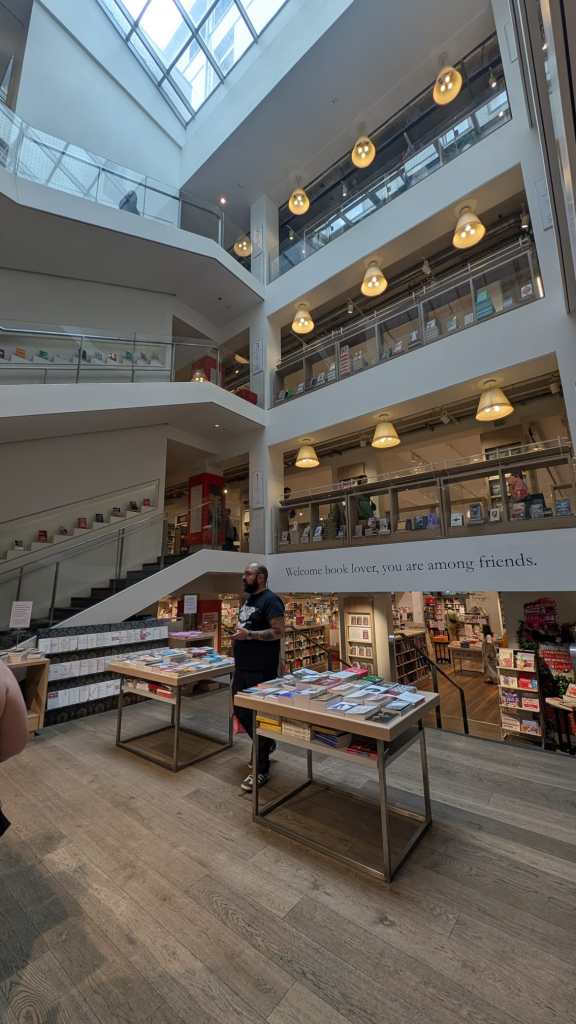
    Foyles bookshop in London, view from inside

    There’s something strikingly reassuring about stepping into a bookshop. I suppose it’s the comfort of knowing you will be surrounded by one of your favourite things in the world – if there ever is a dog bar and bookshop – that’ll be my all-time treasured place.

    It might also be the feeling that, knowing there’s so much out there we still haven’t read – we are so spoilt for choice – just stepping through the door to wander through bookshelves, becomes an act of intention.

    Which book will you pick? Which ones will you leave behind? More importantly, what unexpected book will you take home with you?

    All of this runs through my mind every time I step into Foyles on Charing Cross Road in London. I usually come armed with a list of volumes I must have, and I come out having found some – and adding unforeseen titles to my heist. And a new tote bag, of course.

    This is a personal ritual I truly look forward to every year. This time, I’ll be lucky – I get to visit twice in just a couple of months. 

    Whenever I buy a book, I make a little note inside: the place I bought it from, the date and the city. Every time I pull a book off my shelves and read the small inscription, I’m instantly transported back to the day and place where those pages and I first met. It’s a memory time machine.

    We also catalogue every book we own using Liblib, a digital inventory that helps us avoid buying the same title twice – something that, believe it or not, used to happen quite often.

    My bookshop ritual also takes me to Forbidden Planet, just a few minutes from Foyles, where I hunt down the titles I couldn’t find – particularly any SFF volumes. As you can imagine, there’s always a bit of irresistible merchandise that ends up coming home with me too.

    This year, I was also lucky enough to discover two amazing literary-loving gems: The Brick Lane bookshop (yes, in Brick Lane) and the BookBar in Islington (there’s also one in Chelsea). The first offers a boutique, curated experience, and I was thrilled to find – and buy – the English translation of Pedro Paramo by Juan Rulfo, one of my favourite books.
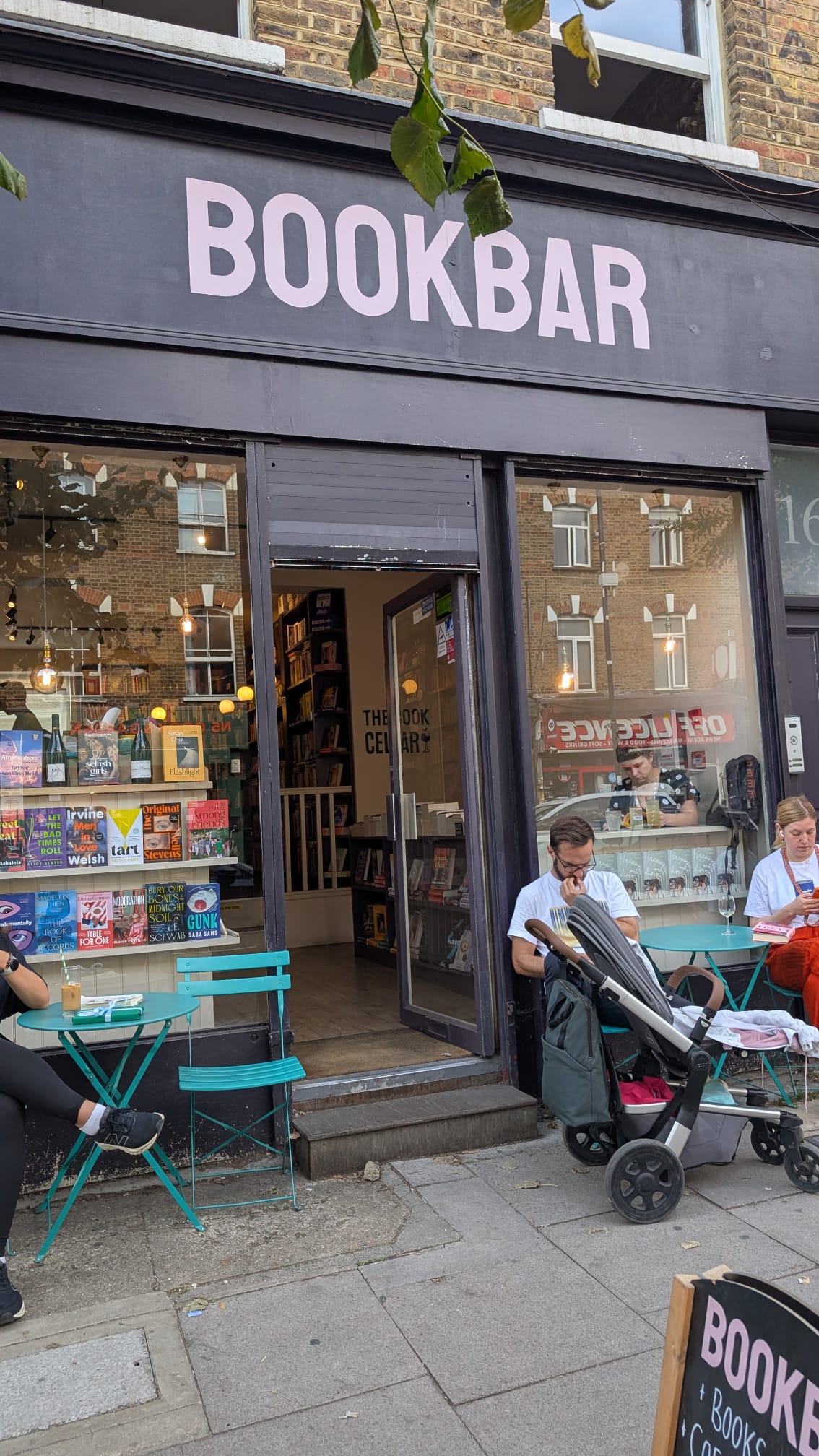
    Image of the exterior of BookBat with pink letters in Islington. People are reading outside


    BookBar is an experience in itself. It’s a small bookshop, filled with great contemporary titles – I walked out with four extras – and a cosy place to drink and read. You can sit outside with your pages, letting London life lull your senses while you’re immersed in someone else’s world, or sit inside and listen to the gentle murmur of conversations.

    I liked it so much, it might just be a mandatory bookmark in the Book of London – the one I’ve been quietly writing, page by page, with every bookshop I visit in the city.
  • Three books earning shelf space

    It’s often said that in order to be a writer, one must make himself a reader. In essence, I think that’s a true statement – but in reality I feel I am a reader and a writer, sometimes they come as a bundle, but more often than not, I am one or the other.

    In fact, I read before I wrote. I spent countless hours as a kid immersed first in Choose Your Own Adventure, and Can You Solve the Mystery?, before becoming a fan of Arthur Conan Doyle and later – in my teen years – of Edgar Allan Poe, Jack London and Ray Bradbury. At some point in that journey, I was engulfed by speculative fiction and magical realism, and the hunger for those words has never left me.

    As a reader, I enjoy the time I set aside to plunge into other people’s worlds, and as a writer, I admire, learn from, and get influenced by big ideas captured in craftily constructed sentences. 

    Half the year is gone and I’ve read forty-seven books so far. Some are new or have been published in the last couple of years; others have aged for decades or even centuries. I can talk at length about at least fifteen of them, but let me be economical and only share three titlesI’ve read this year that are here to stay – in my bookshelves.

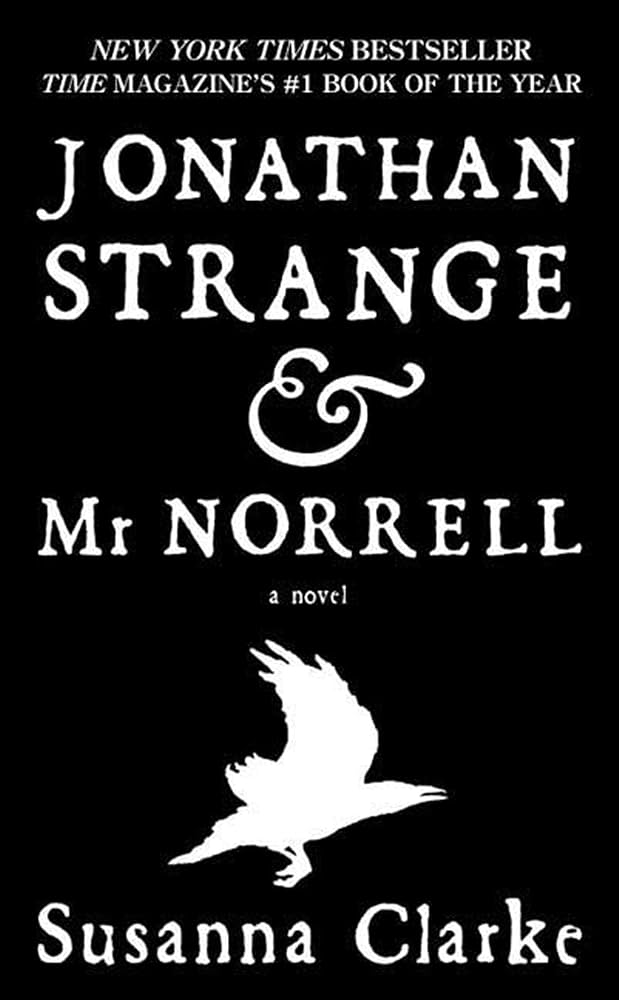
    1. Jonathan Strange & Mr Norrell by Susanna Clarke (Bloomsbury Publishing, 2004)

    I got to this book the long way around, after reading the wonderful Piranesi. It’s a thick book full of delightful footnotes that add to the worldbuilding Clarke created, referencing fictional books and tales that make you believe magic in England is a real thing. 

    The arc of both main characters is well thought out, and although most readers will cheer for Jonathan Strange, the reality is that the two practical magicians of Britain are deeply flawed.

    One can only aspire to write at this level. One can only be delighted to have read it.

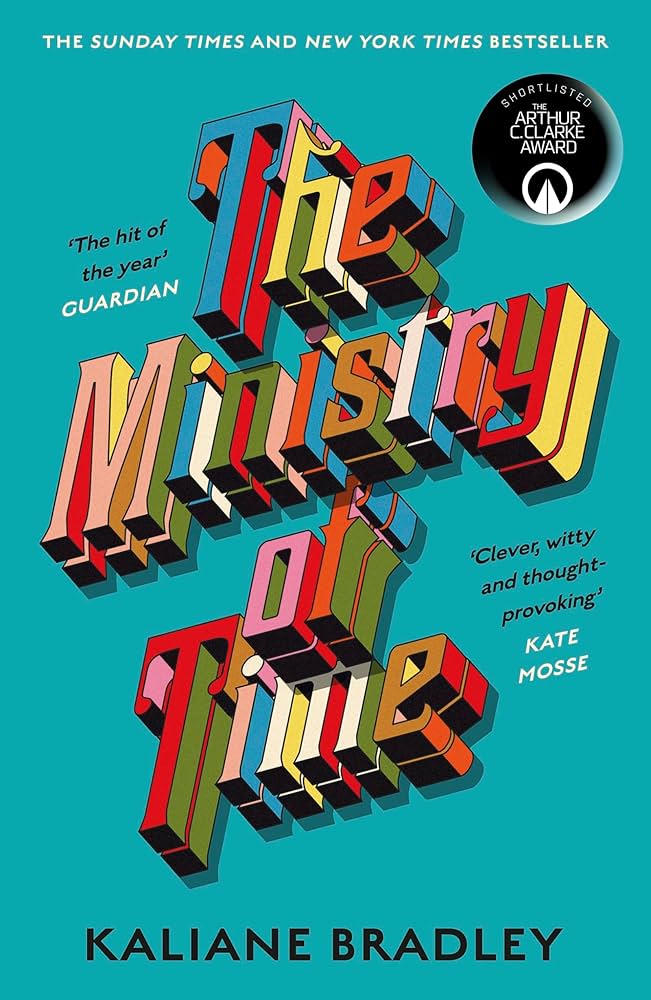
    2. The Ministry of Time by Kaliane Bradley (Hodder & Stoughton, 2024) 

    Somehow I had been living in a cave, unaware of this near-future time travel amazement. It’s not just my fascination with time travel in general – it’s the fact that the present is both the future and the past in this story.

    I also didn’t know it had links to the doomed Arctic expedition of HMS Terror and HMS Erebus. Like Bradley, I was a big fan of The Terror, the AMC TV series that sparked this What if? plot. 

    Art creates art that creates art.

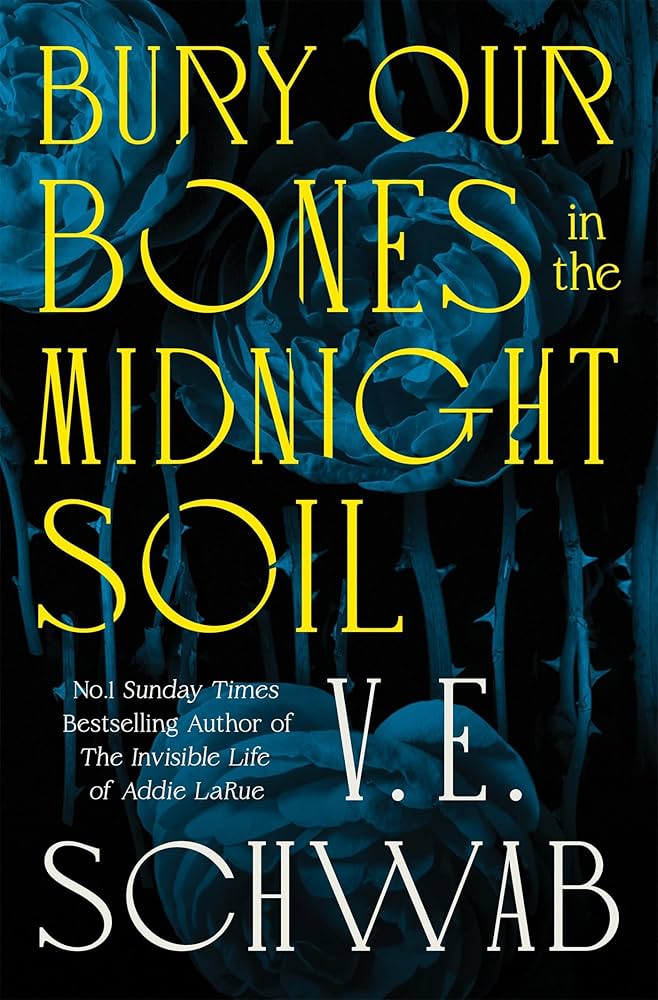
    3. Bury Our Bones in the Midnight Soil by V. E. Schwab (Tor Books, 2025)

    I liked this as much as I liked The Invisible Life of Addie LaRue. Perhaps it’s the historical journey through different parts of Europe, the characters who change over centuries, or the fact that – despite lesbian vampires being at its core – the story remains grounded.

    I think the words and the narrative flow seamlessly in a world that takes one fantastical creature and spins it on its head, ditching some rules (mirrors, for instance) and bringing in new ones to surprise and delight.

    Several well-thought-out lines are spread throughout the pages, and it was a real page turner for me.

    I’ll be back at the end of the year with three more books earning a shelf.

  • Here came the sun

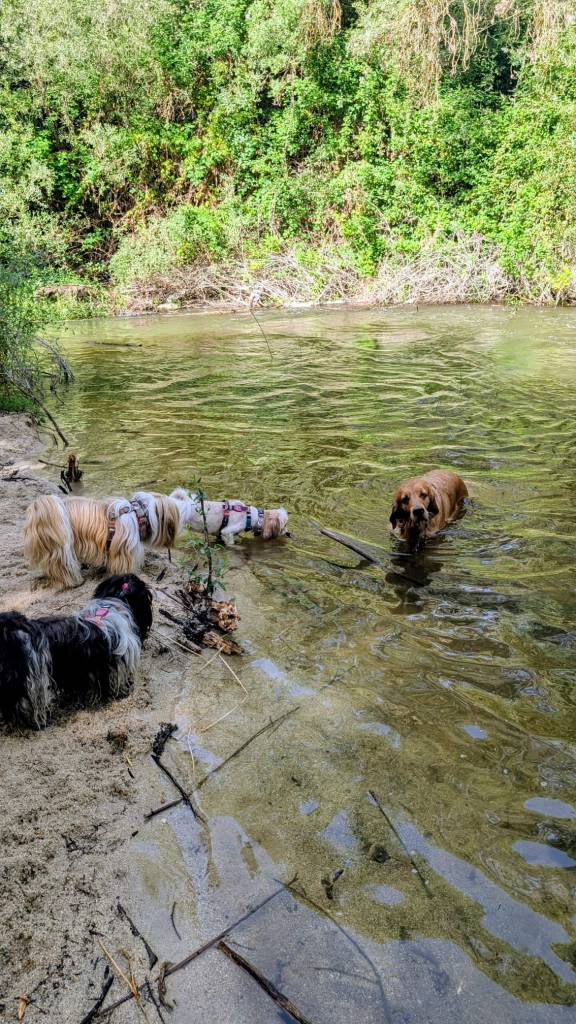
    The sun has been relentless and unforgiving this June across Europe. Living in Madrid, I haven’t escaped its punishment — nor have my dogs, who now get their playing time early in the morning and very late at night. In between, they live in an eternal siesta lull, broken only by a quick bathroom break beneath the shade.

    Funnily enough, I was doing the maths the other day and realised that, on this summer schedule, they get almost an hour of extra activity.

    And something similar is happening to me. No, I’m not having more siestas (well maybe one on the weekends), but I am adjusting myself to the heat — and I’ve realised that I am reading more than ever.

    For about eight years,  I’ve joined the Goodreads Challenge as a way to give me a target and a deadline to tackle my ever-growing list of to-be-read books. As I write this, there are 192 fiction books  and 80 non-fiction titles waiting. I am obviously not going to get through that list this year — or next, for that matter, but I’m making great progress in this year’s challenge. I aimed to read 75 and I’ll probably reach 80.

    To me, reading is like breathing. If I don’t get the chance to dive into the books I love — even for just a few minutes each day — my energy lags and my spirit crumbles. I read as a reader, immersing myself in stories and worlds, suffering or journeying with the characters. And I read as a writer, admiring a well crafted prose, a line that is superb, words that drive feelings. It has its risks, though. Sometimes  — recently, very often — I’ll read something that makes me think, ‘I might not be this good’. 

    But then I remember: it’s not about comparisons, it’s about learning. If I am lucky enough to read a beautifully written book — a story I don’t want to put down — that’s food for my brain. Art, writing, is all about throwing every line, every idea into a compost bin, until it gives life to something new. 

    And I like to think that my dogs feel the same way. I don’t believe they run through the park or swim in the river wondering often how other dogs are doing. If they see them — or sniff them — they might pick up a thing or two, and then carry on running and playing. Happier to have learned something new.